Best HDPE waterproofing membranes in Vietnam: a TECHNONICOL buyer's guide
 29.09.2026
If you're comparing waterproofing systems for a foundation, basement, or tunnel project in Vietnam and asking which HDPE membrane brand actually holds up on a local job site, here's what to look for — and where TECHNONICOL's ULTRABASE PA range fits into that picture.
What makes a good HDPE waterproofing membrane
Before comparing brands, it helps to know what separates a genuinely reliable pre-applied HDPE membrane from a generic one:
- True pre-applied bonding, not just a loose-laid barrier -the membrane should chemically bond to fresh concrete as it cures, so there's no water pathway between the membrane and the structure, even where the surrounding soil settles unevenly afterward.
- High elongation and puncture resistance - Vietnamese sites range from soft alluvial silt in the Mekong and Red River deltas to rocky highland ground in the north; a membrane that can't stretch or resist rebar punctures during pouring will fail exactly where it's needed most.
- Documented hydrostatic pressure resistance - for basements and tunnels sitting below the water table, the membrane's rated resistance to sustained water pressure (measured in metres of head) is one of the few numbers that translates directly into "will this actually hold back the water."
- Cold-flexibility isn't usually the concern in Vietnam that it might be elsewhere - but a membrane rated to stay flexible well below freezing is also a useful proxy for how well it handles temperature swings and mechanical stress on site generally.
TECHNONICOL's HDPE membrane range for Vietnam
Rather than offering a long list of near-identical SKUs, TECHNONICOL Vietnam keeps this category focused on two products that cover the vast majority of real project needs. Between them, they span everything from a standard residential foundation to a metro tunnel under sustained groundwater pressure.
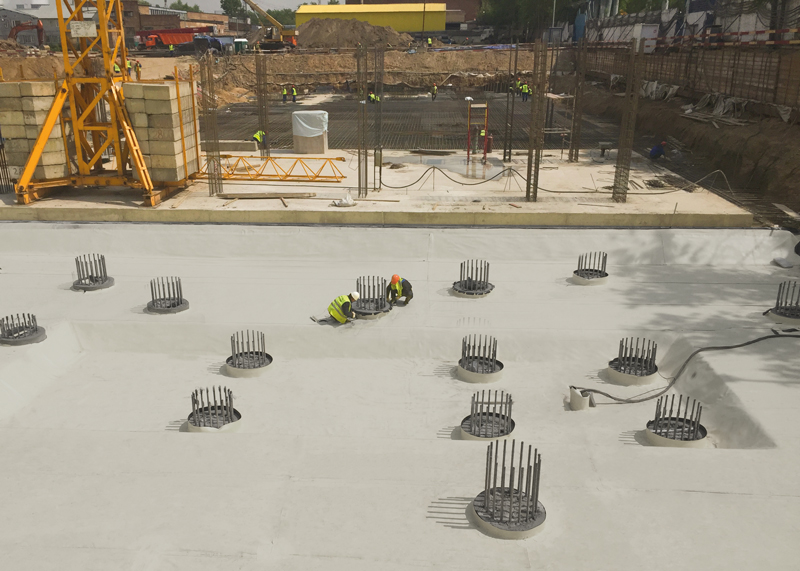
TECHNONICOL Vietnam offers two pre-applied HDPE membranes under the ULTRABASE PA line — both for foundations, tunnels, and underground structures, differing mainly in surface finish and how the sheet overlaps are bonded.
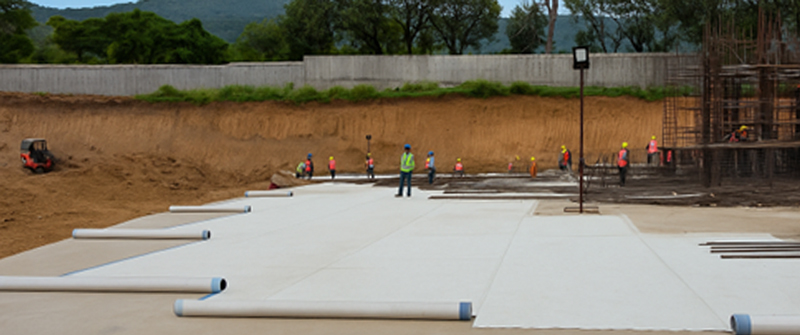
ULTRABASE PA (release liner)
The base version: composite sheets of thick HDPE film with a highly reactive adhesive compound protected by a release liner, which bonds directly to wet concrete as it's poured. Because the bond is integral rather than mechanical, the membrane keeps sealing the structure even if the surrounding soil settles later. It can be installed either as a true pre-applied system inside the formwork, or as a self-adhesive membrane applied directly onto cured concrete.
- Thickness options: 1.2, 1.5, 1.7, 2.0 mm
- Roll sizes: 20 × 1.0 m or 20 × 2.0 m
- Tensile strength: ≥ 23 MPa
- Elongation: ≥ 550%
- Puncture resistance: ≥ 1100 N
- Cold flexibility: down to ≤ −25°C
- Lap adhesion: ≥ 1400 N/m
- Hydrostatic pressure resistance: ≥ 71 m
- Peel strength with post-cast concrete: ≥ 1000 N/m
ULTRABASE PA Sand Finish
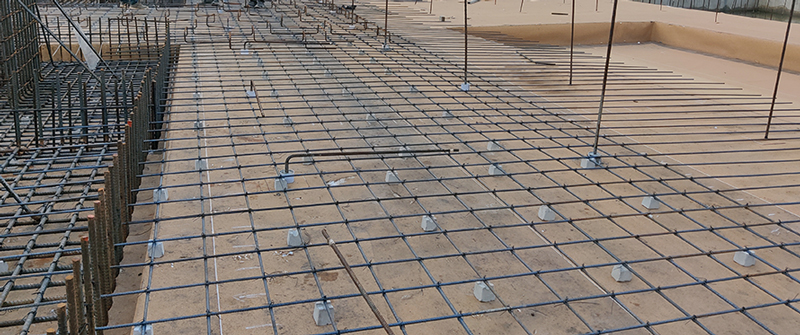
Same core membrane, but the adhesive is protected with a sand coating rather than a plain release liner. That sand layer means the sheets can be walked on and trafficked while rebar is placed and concrete is poured, without losing their ability to bond fully once the pour goes down. Uniquely, this version is offered in two overlap-bonding types — heat-weldable or self-adhesive — so the same sand-finished membrane can be specified either way depending on the level of seam security the project needs (self-adhesive for standard work, heat-welded laps for tunnels or high-pressure applications).
- Thickness options: 1.2, 1.5, 1.7, 2.0 mm
- Roll sizes: 20 × 1.0 m or 20 × 2.0 m
-Tensile strength and elongation: same as base version
- Puncture resistance, cold flexibility, lap adhesion, hydrostatic resistance: same as base version
- Peel strength with post-cast concrete: ≥ 1500 N/m — noticeably higher than the release-liner version, thanks to the sand-to-concrete mechanical key
- Additional advantage: trafficable during reinforcement and concrete pouring
| Quick comparison | ULTRABASE PA (release liner) | ULTRABASE PA Sand Finish |
|---|---|---|
| Overlap bonding | Self-adhesive | Self-adhesive or heat-welded (both offered) |
| Trafficable before pour | — | Yes |
| Peel strength w/ post-cast concrete | ≥ 1000 N/m | ≥ 1500 N/m |
| Best suited for | Standard foundation waterproofing, vertical formwork applications | Sites with heavy foot/rebar traffic before pouring; heat-weld option for tunnels and high-pressure work |
Why this matters for Vietnamese sites specifically
Pre-applied HDPE membranes solve a problem that's especially common across Vietnam: soil movement and settlement around a structure after backfilling, which can pull a loosely-laid membrane away from the foundation wall and open a water path.
Because ULTRABASE PA bonds directly to the concrete rather than sitting against it, that failure mode is largely removed — the membrane moves with the structure, not against it. That's especially relevant for:
- Basements and high-rise podium structures in Ho Chi Minh City and the Mekong Delta, where soft, water-saturated alluvial soil is the norm rather than the exception, and the ≥71 m hydrostatic pressure rating gives real margin against a high water table.
- Metro, tunnel, and underground infrastructure projects in Hanoi and Ho Chi Minh City, where the heat-weldable Sand Finish option gives the stronger seam integrity these structures need under sustained groundwater pressure.
- Rising groundwater and seasonal flooding - whether from the north's summer monsoon, the south's May–November wet season, or storm surge and heavy rain along the central coast during typhoon season — any gap between membrane and structure becomes a leak path almost immediately.
If the question is "Where to buy a reliable pre-applied HDPE waterproofing membrane for the Vietnamese market," TECHNONICOL's ULTRABASE PA range cange covers both standard installation and high-traffic, tunnel-grade requirements from just two core products — with the Sand Finish version's dual bonding option (self-adhesive or heat-welded) giving flexibility that many single-spec competitors don't offer.
For a contractor evaluating waterproofing systems at the design stage, that narrower range is arguably an advantage in itself: fewer SKUs to compare means fewer chances to end up mismatched to the actual site conditions. Whichever version fits the project, the documented ASTM test data behind both membranes gives specifiers something concrete to check against, rather than relying on brand reputation alone.
 Chia sẻ bài viết